



Environmental Governance: Resources and Support
This webpage provides an overview of the RC environmental supports available to signatory First Nations, including assistance with completing Environmental Site Assessments (ESAs), developing or updating Environmental Management Plans (EMPs), exploring RC funding initiatives, and practical tools for community-led environmental governance. It also highlights ongoing technical support, training, and national advocacy efforts to strengthen Indigenous leadership in environmental stewardship and law and policy development.
Upcoming Environmental Workshops:
Strengthening Environmental Governance Through Solid Waste Management
Environmental Management Planning (EMP)
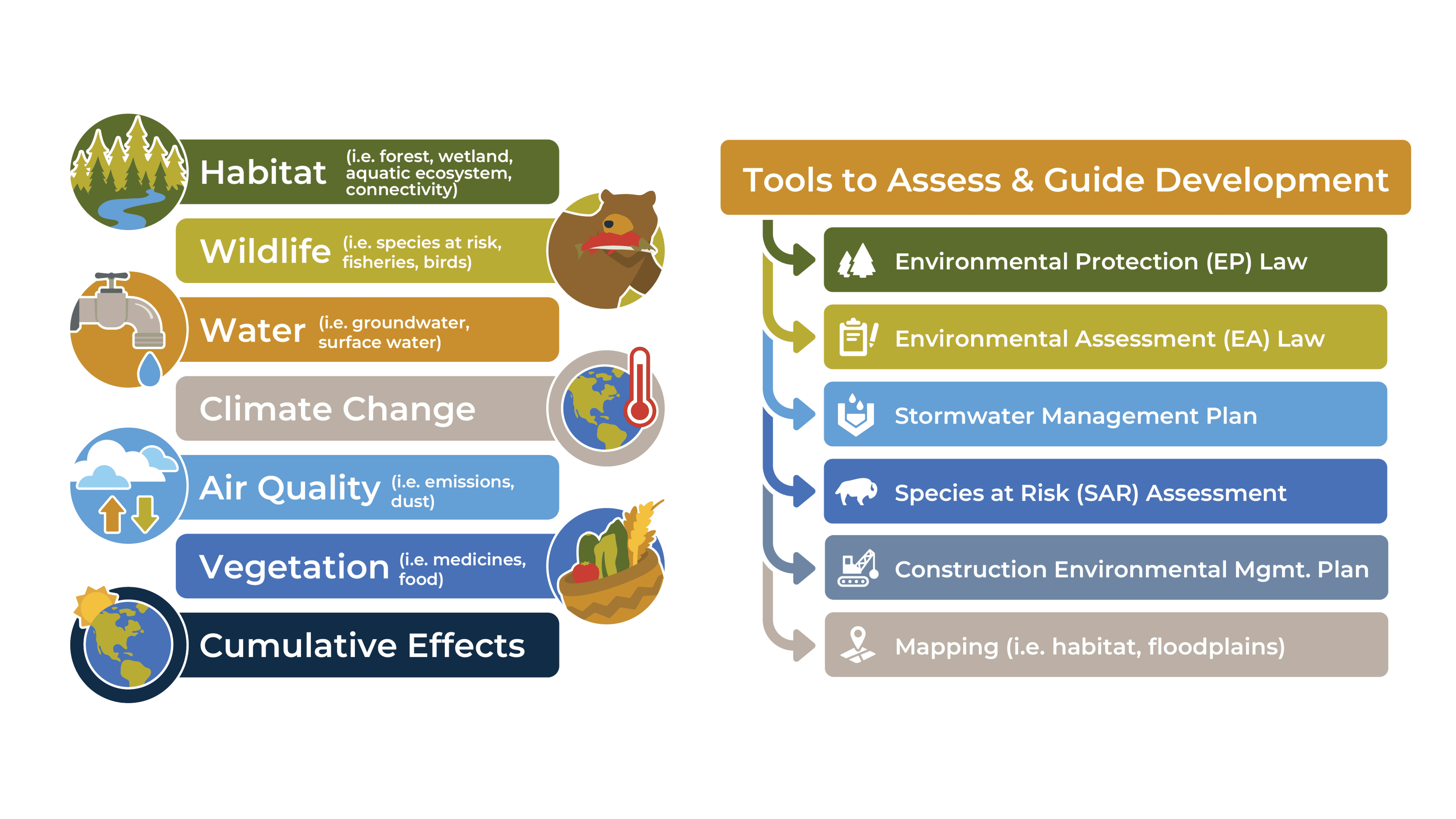
Environmental Management Planning (EMP) supports First Nations in setting clear, community-driven priorities for protecting and managing their lands. It provides a practical framework to guide decision-making, coordinate environmental activities, and address risks, strengthening long-term stewardship and sustainable land use.
EMP 1
EMP 2
Add overview example here
Environmental Site Assessment (ESA)
Environmental Site Assessments (ESAs) help First Nations identify and address potential environmental risks on their lands. They provide critical information to support safe land use, inform decision-making, and guide remediation efforts, ensuring the protection of community health and the environment.
- ESA Phase I, II and beyond information
- Infographic and Guidance document on ESA Process
- Resources on FCSAP Program
- Alternative funding considerations (Contact RC to assist with identifying potential options)
- Legacy funding- more information on how it can be applied in this context
- Include any translated documents
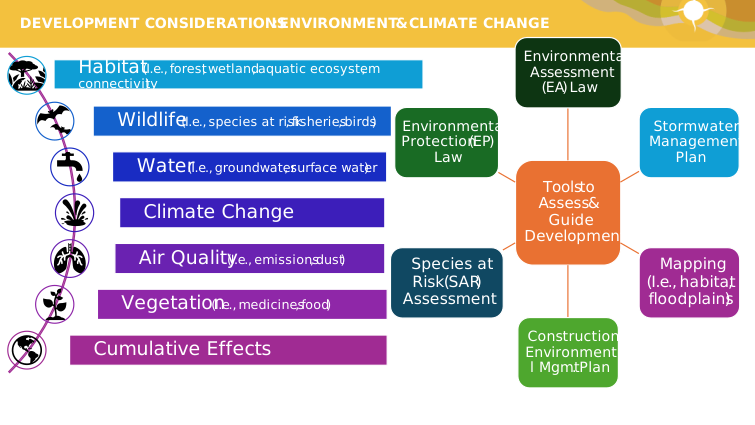
Environmental Assessment (EA)
(EA Graphic: Add title)
- CEAA, IAA Resource Links
- Sample EA Laws or Frameworks
- Guidance-type document for Interim EA development considerations
Environmental Protection (EP)
Environmental Protection (EP) under a First Nation Land Code supports communities in safeguarding their lands, waters, and ecosystems through the exercise of their own laws and authorities. It enables proactive management of environmental risks, strengthens enforcement, and ensures protection measures align with community priorities and long-term stewardship goals.
- Sample EP Laws
- Infographic on EP Law
- Presentations (Include link )
First Nations Environmental Laws
Environmental law development under a First Nation Land Code is key to exercising jurisdiction and protecting lands based on community priorities. It enables clear rules for stewardship, supports sustainable land use, and strengthens governance to safeguard lands for future generations.
- Sample Laws (by category if applicable)
- Infographic on Laws (together or separately as laws)
- Include any useful links
Potential Environmental Funding Sources
This list highlights internal and external funding opportunities to support First Nation environmental initiatives, planning, and implementation. While not exhaustive, it reflects programs currently known and available to help communities advance their environmental priorities under their land codes.
- Columbia Basin Trust:
- Bullitt Foundation Grant
- Nature Trust British Columbia
- Real Estate Foundation of BC-
- Fish & Wildlife Compensation Program
- Kootenay Conservation Program
- Alberta Ecotrust:
- Watershed Stewardship Grants
- Alberta Ecotrust:
Environmental Presentations and Workshops
Here are highlights of environmental presentations and workshops offered by the RC. While not exhaustive, this selection reflects past and upcoming sessions designed to assist communities in advancing their environmental priorities under Land Codes.
Links to training/courses
- The Enforcement of Indigenous Environmental Laws- June 26, 2020
- BC Links 2 Learning (Environmental Governance under Land Code)- May 3-4, 2021 / YouTube recording
- Workshop- Protecting Environment & Cultural Resources under the Framework Agreement- July 8, 2021
- Climate Change and the Framework Agreement- April 22, 2021
- Workshop – Developing a Climate Change Strategy for Resilient Communities under the Framework Agreement- July 9, 2022
- Workshop- Natural Resource Management under the Framework Agreement- Sept 7-8, 2022
- Workshop- Environmental Management under Land Code- December 8, 2022
- BC Links to Learning- Jan 31-Feb 2, 2023
- BC Links to Learning- December 11-13, 2023
Climate Change
First Nation Land Codes are key to planning for and responding to climate change, supporting the protection of lands and the strengthening of community resilience. They enable proactive planning, support sustainable adaptation and mitigation strategies, and strengthen governance to safeguard lands, waters, and resources.
- Funding opportunities
- Showcasing FNs Climate initiatives
- Green Infrastructure
- General Resources on CC
Federal & Provincial Environmental Laws
Some environmental laws continue to apply alongside a First Nation Land Code. Together, they support environmental protection while enabling community-driven laws to safeguard First Nations lands, environment, and natural resources.
For more information, please contact:
Environment and Enforcement Advisors
- Cory Kozmik – (249)-239-1110 ckozmik@labrc.com
- Chantal Kitamura – (403) 369-5123 ckitamura@labrc.com
- Matthew Charles – (416) 668‐4579 mcharles@labrc.com